What to Do With Kids on Shabbat
A practical guide for Anglo dads filling Shabbat hours with kids across all levels of observance — eruvin, Shabbat elevators, screen-free activities, secular options, and managing the afternoon slump.
Shabbat with kids is a twenty-five-hour stretch where the usual toolkit — screens, car trips, a quick run to the mall — is either off the table or feels wrong to reach for. If you're new to this, or new to doing it in Israel specifically, that can feel daunting on a Thursday night when you're staring down another Saturday with a four-year-old who does not care about your spiritual growth. The good news: Israel is basically built for this. Whatever your level of observance — fully shomer Shabbat, "traditional" (masorti), or completely secular but still wanting a calmer family day — there's a country-wide infrastructure and a huge menu of options, and most of them are free. This guide is for Anglo dads across the spectrum. We're not here to tell you how to keep Shabbat — that's between you, your family, and your rabbi if you have one. We're here to help you fill the hours with your kids in a way that doesn't end in tears (yours or theirs), whether you're walking to a park two streets away in Jerusalem or driving the family to the beach in Tel Aviv.
First, the Basics: Eruv, Elevators, and What "Shabbat-Friendly" Means
If you're going to leave the house with kids on Shabbat and you keep halacha, you need to know whether you're inside an eruv — a symbolic boundary (usually wire strung on poles) that allows carrying items outdoors, including pushing a stroller or carrying a baby. Nearly every religious and mixed neighborhood in Israel has one, but boundaries and reliability vary, and some communities maintain stricter private eruvin on top of the municipal one (this is especially true in Jerusalem, where the Rabbanut eruv and the separate Eda HaChareidis/Badatz eruv cover overlapping but not identical areas). Check with your local shul before assuming — a downed pole after a storm can put the whole system out of commission for a week. If you live in an apartment building above a couple of floors, get familiar with your building's Shabbat elevator. Israeli law (since 2001) requires larger residential buildings to have a Shabbat-mode elevator, which stops automatically at every floor on a preset cycle so no one has to press a button. It's slow — budget extra time when you're wrangling a double stroller and a toddler who wants to press every button anyway. What's actually open depends entirely on where you are. This is the single biggest thing new olim underestimate:
- Jerusalem, Bnei Brak, and most religious neighborhoods (Ramat Beit Shemesh, parts of Petach Tikva, Modiin Illit): Shops, malls, and public transport are closed. In Bnei Brak and Charedi Jerusalem neighborhoods, streets are physically barricaded to car traffic for the duration of Shabbat. Expect quiet streets, no buses, and a genuinely different rhythm — plan on foot.
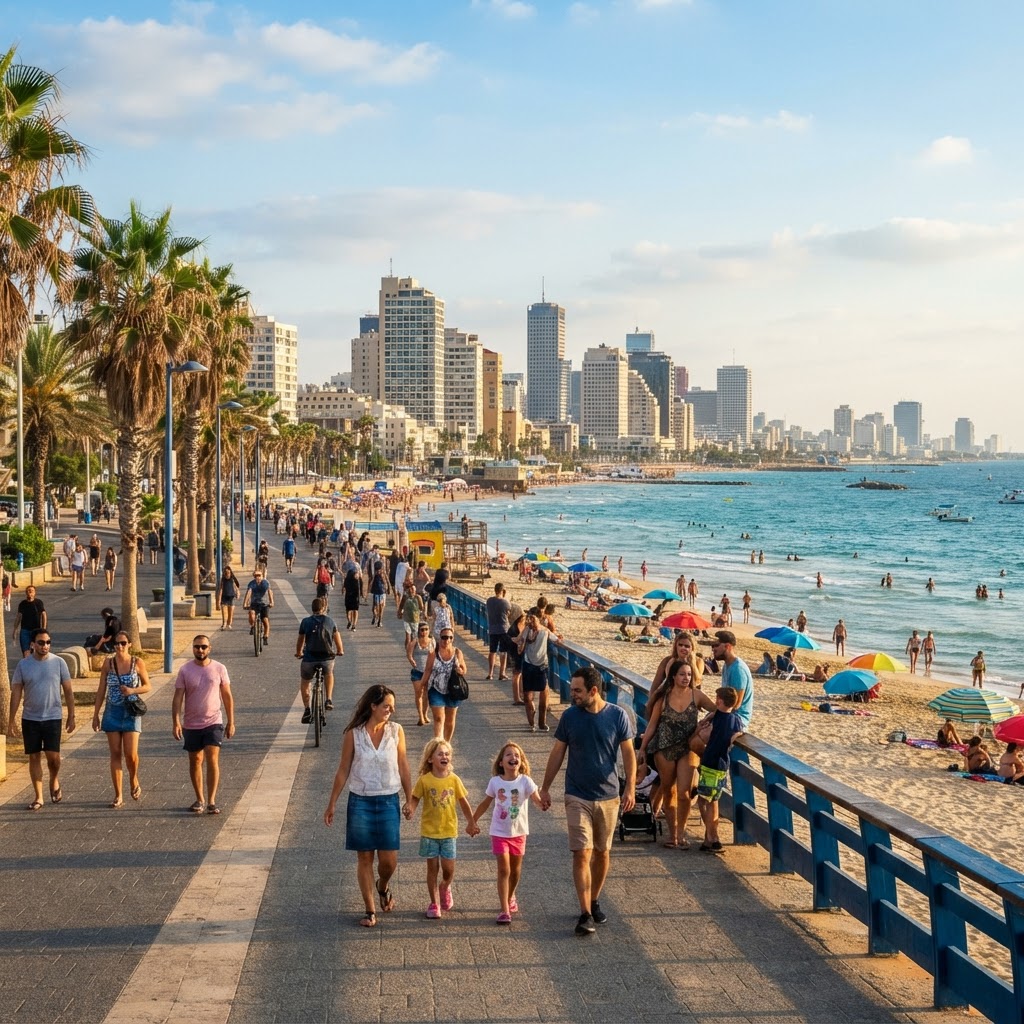
- Tel Aviv, Herzliya, Netanya, Haifa, Eilat: Beaches are open (and busy), many cafes, restaurants, and museums operate, and some suburban malls stay open — the Arena Mall at Herzliya Marina and the Shivat HaKochavim mall in Herzliya are common examples. City buses in Tel Aviv (the Dan bus network's limited Shabbat lines) and the free Tel Aviv beach shuttle also run in some areas.
- Eilat: Functions almost like a non-Shabbat-observant city on Saturdays — most restaurants, beaches, and attractions like Dolphin Reef and the Coral Beach Nature Reserve operate normally, with a Friday-night Kabbalat Shabbat DJ set at Dolphin Reef being a quirky Eilat institution.
- Mixed cities (Ra'anana, Modiin, Beit Shemesh, Efrat): A genuine mix — some businesses closed, some open, often varying street by street. Ask neighbors; it's the fastest way to learn the local map.
Screen-Free, Car-Free: Activities for Observant and Traditional Families
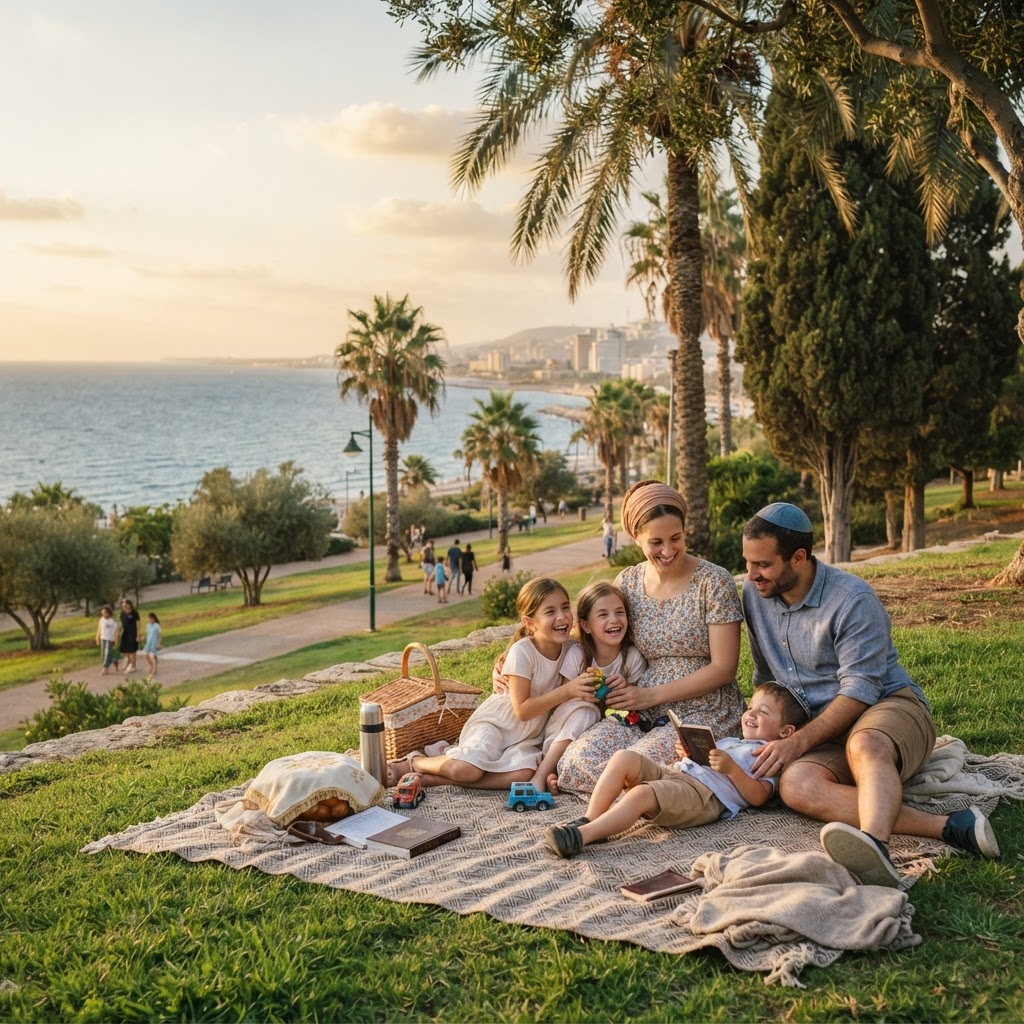
Walk to a park or nature spot. Most religious neighborhoods in Israel are dense with small playgrounds within a 10-minute walk — use the walk itself as the activity, not just the destination. In Jerusalem, several neighborhoods back directly onto walkable green space:
- Ein Yael and the Jerusalem Forest near Ein Karem — reachable on foot from several southern Jerusalem neighborhoods for those comfortable with a longer walk.
- Sataf, a KKL-JNF agricultural/nature site with free entry and easy circular trails, is a favorite day-trip for families who drive, but it's also a serious hike option for older kids from nearby neighborhoods if you're set up for a longer walk.
- Promenades like the Haas Promenade (Tayelet) in Jerusalem's Armon HaNatziv are flat, stroller-friendly, and walkable from several neighborhoods, with a view over the Old City that's worth the trip on its own. Board games and table activities. Classics that don't involve electronics or writing: chess, checkers, backgammon, Connect 4, Bananagrams (the "spelling without keeping score" version works fine), and dominoes. For younger kids, Zingo and Candy Land are easy wins. Keep a dedicated "Shabbat box" of games that only comes out on Saturday — the novelty does a lot of the work for you. Parasha games at the table. Turn the weekly Torah portion into a low-key quiz — one question per kid, a treat for a right answer. "Jewish geography" (find a connection between two people) and 20-questions with Biblical or historical figures work well for older kids and give restless teens something to engage with that isn't a phone. Give kids a job. Seriously underrated. A "dessert helper," a "bencher passer," someone in charge of napkins — small assigned roles turn the meal from something they sit through into something they're part of. Shabbat-appropriate crafts, prepped Friday. Since cutting, gluing, and drawing are generally avoided by observant families on Shabbat itself, do the prep on Friday: pre-cut felt or paper shapes for a "build a scene" activity, a pre-strung threading/lacing board, magnetic tiles, or a sensory bin with rice or pasta the kids can scoop and pour without any tools. Find a Tot Shabbat or kids' group at an Anglo shul. Many English-speaking congregations across Israel run a parallel kids' program during services — a huge relief for parents who want an hour of quiet davening. Ask at your local Anglo shul directly (options exist in Jerusalem, Ra'anana, Modiin, Beit Shemesh, and Efrat, among others); listings and community directories like Anglo-List's synagogue directory are a good starting point for finding English-speaking congregations near you.
Driving and Spending: Activities for Secular and Less Observant Families
If your family drives or spends money on Shabbat, Israel on a Saturday genuinely comes alive in the non-religious cities — you have real options, not just "whatever's open near the hotel." Beaches. Tel Aviv's beaches are at their busiest and liveliest on Saturday, with lifeguards on duty, beach bars and kiosks open, and a real family scene. The same goes for Herzliya, Netanya, and Haifa's beaches. Malls and shopping. Most malls in central Israel close from Friday afternoon, but a handful of suburban malls stay open on Saturday, including the Arena Mall at Herzliya Marina and the Shivat HaKochavim Mall in Herzliya. Worth checking hours directly before you drive, since this changes. Ramat Gan Safari (Zoological Center). One of the most popular Saturday family outings in the country — open on Shabbat with entrance typically running mid-morning to mid-afternoon. A safe bet for a full day out with kids of almost any age. Museums. Many Tel Aviv museums keep Saturday hours (morning through early afternoon), including the Tel Aviv Museum of Art, the Eretz Israel Museum, and the ANU Museum of the Jewish People — good options if you want air conditioning and something educational mixed into the day. Old Jaffa. Being a mixed Jewish-Arab area, Jaffa's shops, cafes, and restaurants run a normal Saturday, and the flea market area and port are lively with families. Hikes further afield. If you're driving anyway, the Coral Beach Nature Reserve and Dolphin Reef in Eilat, or northern trails around the Sea of Galilee, make for a full and rewarding Saturday day-trip.
Balancing a Screen-Free Day
With Restless Kids Whatever your observance level, one Shabbat challenge is universal: a day without the usual digital pacifier can feel very long with young kids, especially between lunch and late afternoon (the notorious Shabbat afternoon slump). A few things that consistently help:
- Front-load outdoor time. A tired kid post-walk or post-park naps better and melts down less at the table.
- Rotate a small set of "Shabbat-only" toys or games so they feel special rather than repetitive week to week.
- Lower the bar on quiet. A loud, slightly chaotic Shabbat table with kids singing off-key and banging along to zemirot is a feature, not a failure.
- Trade off with your spouse or another family. Doing "shifts" with the kids, or combining with another family with kids the same age, splits the mental load and gives the children playmates.
- Accept a rest day for yourself too. You don't have to entertain non-stop — a long, boring stretch of unstructured time is exactly what childhood development research says kids need more of, not less.